Long, as a word, may be an adjective, an adverb, a verb, or even a noun – any lexical word category. To wit:
a long time
how long
to long for
the long and short of it
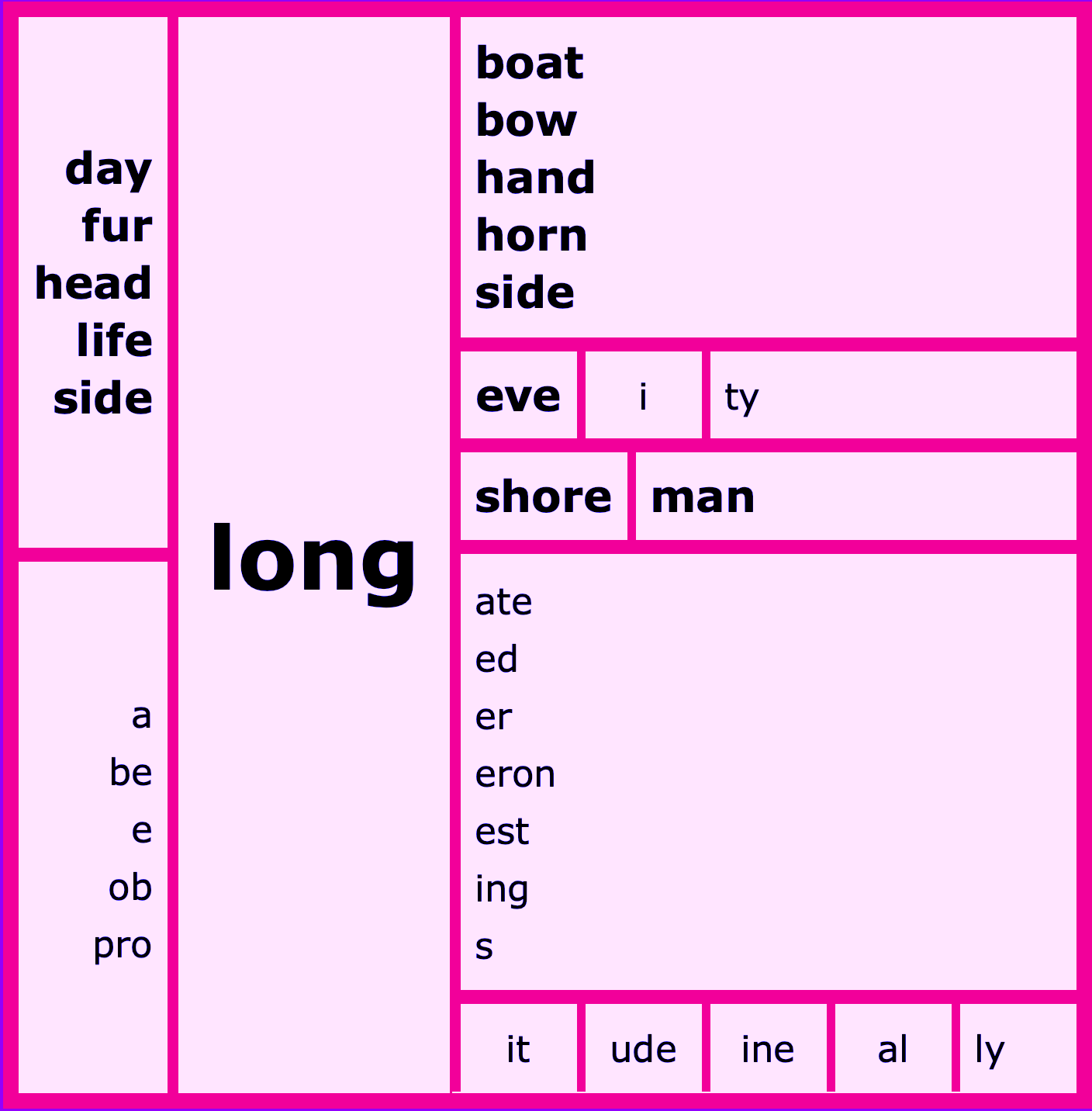
Some words with a <long> base element are Germanic, around in English since the beginning, like long, along, furlong, and longing. Others have a Latin root, such as elongate or longitude or oblong. The word belong doesn't belong in either category; it is Germanic, built from native English parts, but it isn't attested until Middle English, around the time of Chaucer.
There are some unknowns in the history of this word family, some tributaries on the etymological river that have dried up to a 'probably' or a 'perhaps.'
Old English has several attested uses of a verb langian, which could mean 'belong, pertain (to),' 'wish or send for,' or 'grow long, lengthen.' Whether these various verb uses share a common root is debated, but notice that Latinate synonyms like pertain ('belong') or extend ('lengthen') are themselves cognate, so it's reasonable to posit a single ancestry with a historical semantic field large enough to accommodate all of the present day English forms, both Germanic and Latinate, and therefore, a single <long> base element that surfaces in both languages.
Words may operate in a variety of contexts. Any word has infinite possible uses in its language; it may surface inside of infinite phrases, in infnite sentences, in infinite texts or utterances. [This is why the notion of a 'sentence matrix' is absurd: matrices represent finite structures; sentences are infinite.] Words are not themselves infinite, but their potential uses are. Therefore, a word's uses in sentences or phrases or texts or utterances are not permanent, not its permanent context.
A word's permanent context is...